March 9-11; Pahrump, NV; Death Valley National Park
We’re staying in the area around Pahrump, NV for 8 days, so once again, I’ll break this stop into two or three parts. We arrived at the Lakeside RV Resort (and Casino) on Monday afternoon. It’s not the closest to Death Valley National Park, but it’s well within our range to drive each day. Unfortunately, it began to rain just as we arrived. Nothing works quite like Debbie and Lynd arriving in the desert to get them some much needed rain. By coming here a day early, we accomplished our goal of not having our moving day be during the rains that were due in Desert Hot Springs, but that unfortunately had us sitting around the trailer in Pahrump on Tuesday while it rained all day.
On Wednesday, we set out after breakfast for our first day in the national park. We’re about an hour from the center of the park and the main visitor center. Our first stop was at the Furnace Creek Visitor Center where Debbie stamped her parks passport book and purchased a couple of things, including a t-shirt. We checked out the exhibit area and watched the 20 minute movie about the park. We then talked with a ranger, who gave us several suggestions on things to see and do while in the park. As usual, this ranger was very helpful and was able to guide us towards things that were of the most interest to us.
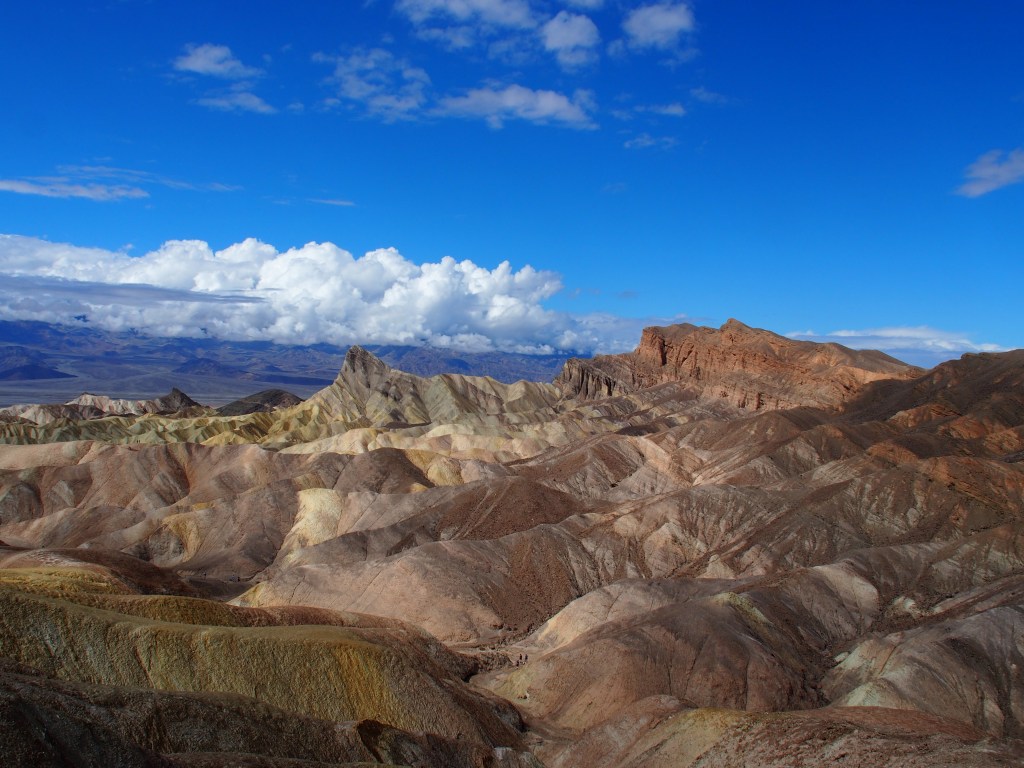
From there we headed up to an overlook called Zibriski Point. This was also the trailhead for one for the many hikes that are located around the park. The views were spectacular and it’s impossible to explain just how many different colors there are in the hills and mountains of Death Valley. Personally, I think they rival the Grand Canyon in the variety of colors held within the layers of these mountains and canyon walls.
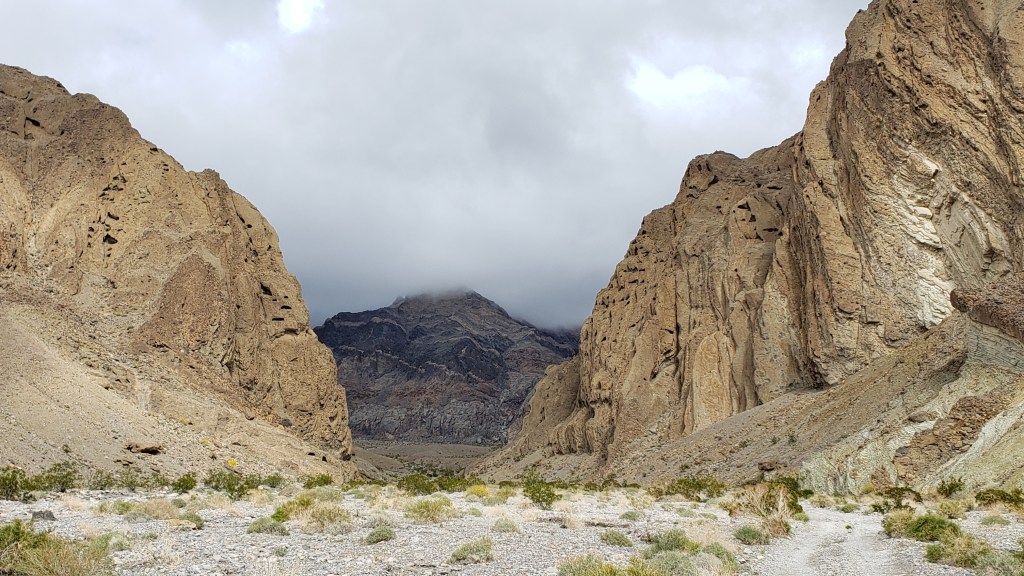
After taking in the amazing views at Zibriski Point, we headed back up the main road toward our next destination before deciding to detour onto a rough gravel “road” several miles back up into a wash to see a feature called the Hole in the Wall. The was basically a break in a long ridge with a really nice view of the mountains on the other side. We happened across several families that were camping along the wash. The ride was pretty rough, and the “road” almost non-existent at times, so we were very glad that we had a big 4×4 truck.
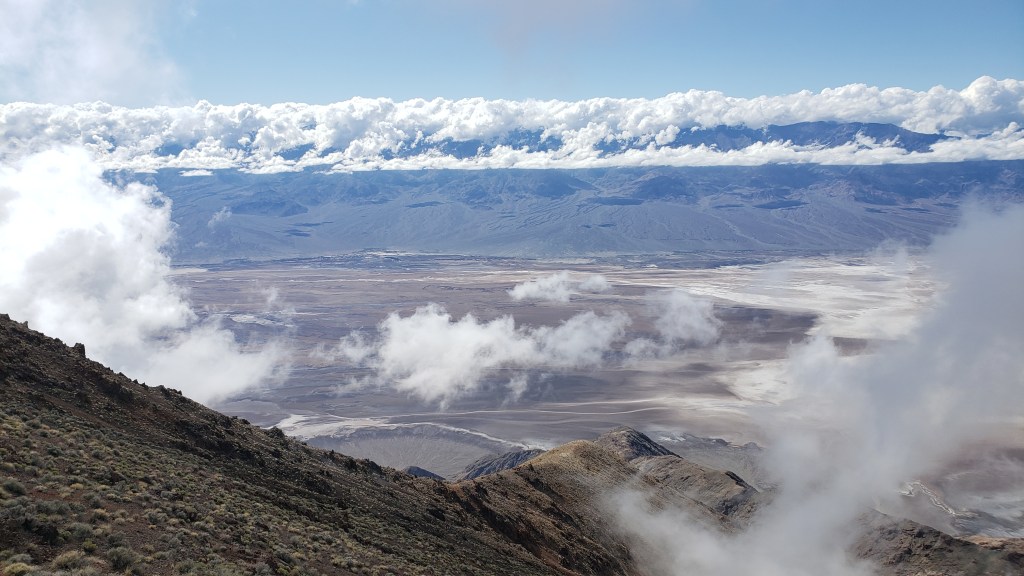
Back on the main road, we’d hoped to take a short scenic gravel road through Twenty Mule Team Canyon which was named after the teams of mules used to haul borax out of the area back in the late 1800’s. Unfortunately, the road was closed. I imagine that it was a result of the rain that had happened the day before. We instead, drove to the narrow, twisting, paved, 14 mile long road up the Amargosa Mountains that border the east side of Death Valley to Dante’s Viewpoint. This overlook is just a few feet short of a mile above sea level, looking down onto the lowest point in North America at Badwater Basin, but also across the valley to the the Panamint Mountains. The tallest peak on the Panamint Range is Telescope Peak, directly across from Dante’s View, and whose snow covered summit is towering over the valley at over 11,000 feet in elevation. Unfortunately for us, there were clouds covering the summit that day, and even coming up out of the the valley and obscuring our view. A ranger that was giving a talk while we were there told us that is was very rare that it wasn’t perfectly clear throughout the valley, offering views for many miles. Of course, Debbie and Lynd, the Rainmakers, made sure that didn’t happen.
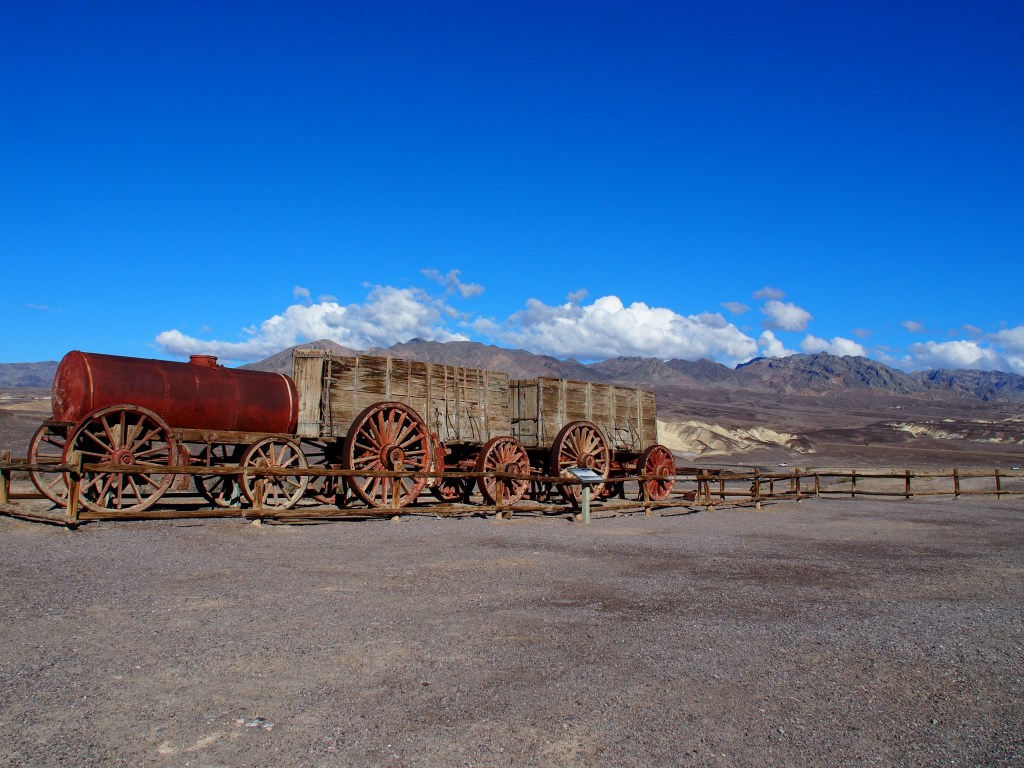
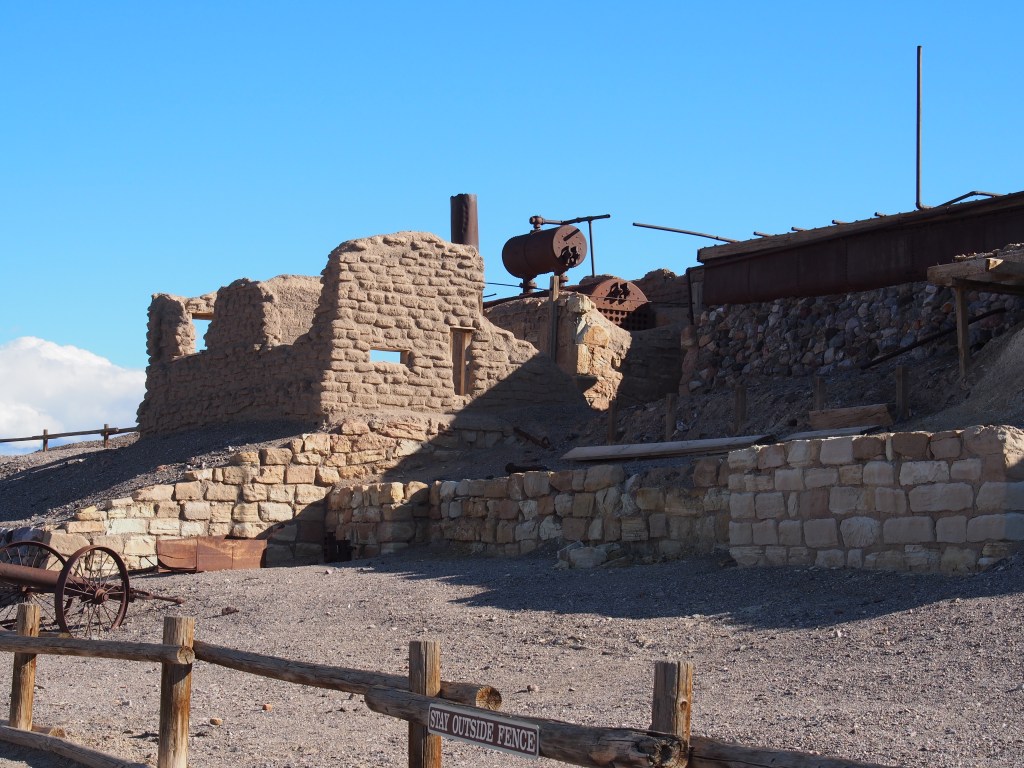
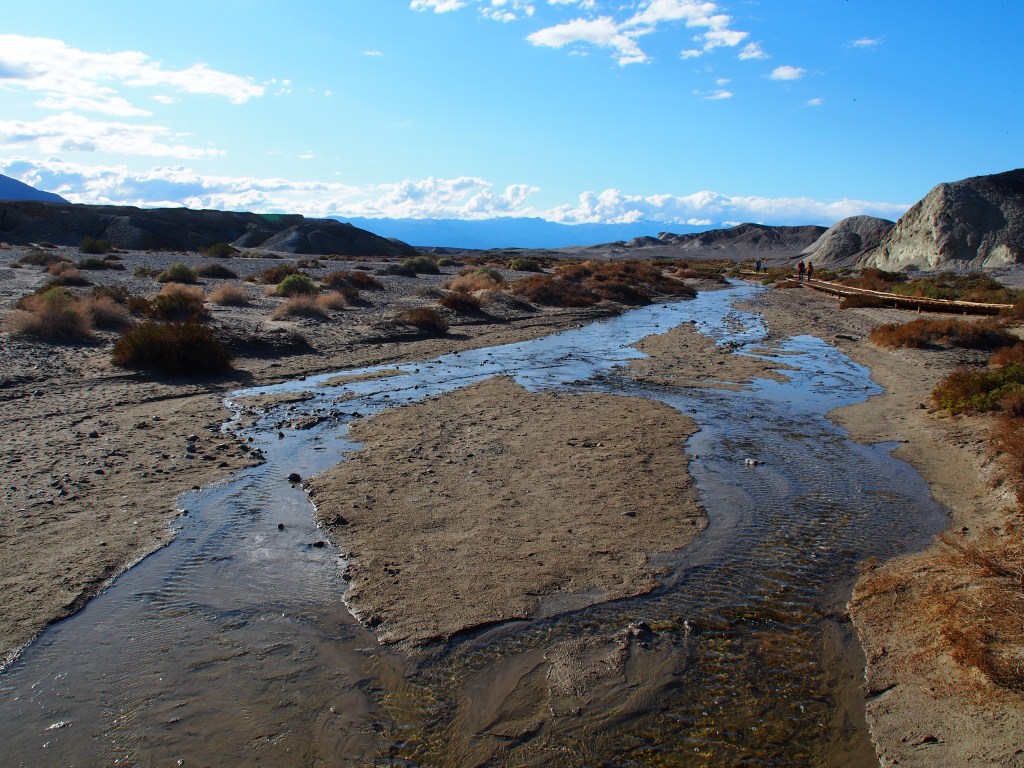
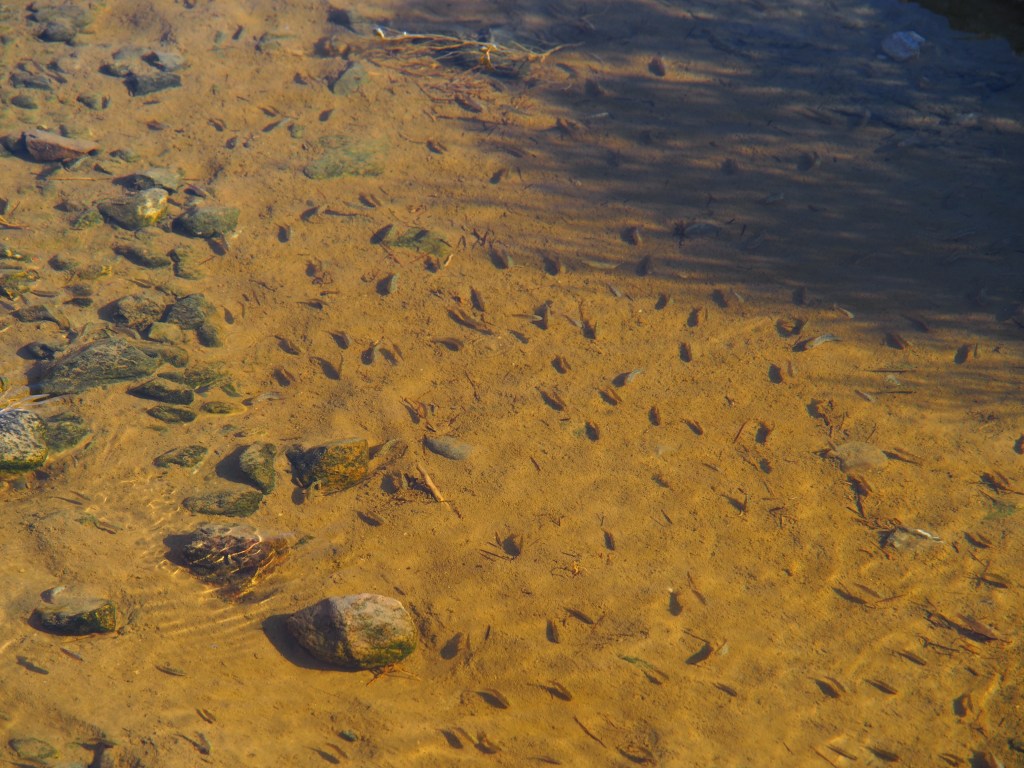
Since it was still before noon, we decided to drive north though the park to see a couple of other sights and try to make it to another Ranger talk that was scheduled for sunset. First of these stops was the old Harmony Borax Works. The facility refined borax, mined from the valley floor, for several years during the 1880’s. The refined borax was hauled to the railroad in huge wagons pulled by, you guess it, teams of twenty mules. We then drove up the road a bit further to to a small stream called Salt Creek. We were surprised that a stream was there in the dessert and that it was more salty than the Pacific Ocean. Salt Creek was actually filled with a small fish called the Salt Creek Pupfish whichare found nowhere else in the world. It’s one of ten sub-species of pupfish that are only found in the Death Valley area, each uniquely adapted to its own specific environment.
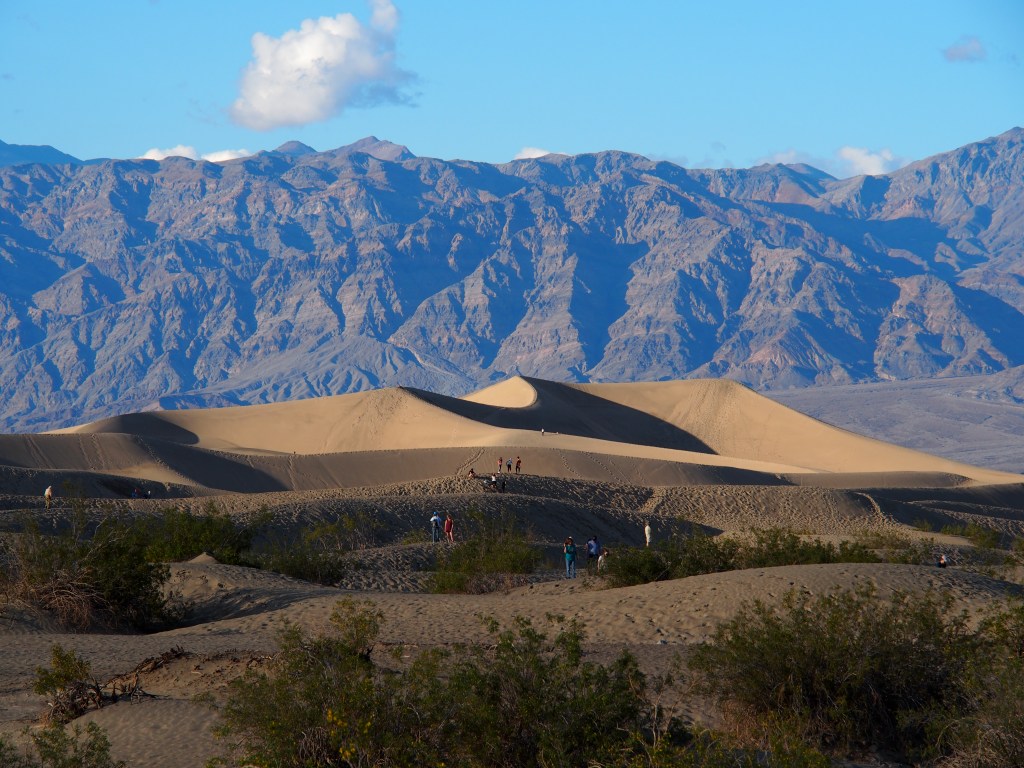
Our last stop of the day was at the Mesquite Flat Sand Dunes, some of which are over 100-feet tall. For those of you that are Star Wars fans, this is where they filmed the scene in Star Wars Episode IV: A New Hope where R2D2 and CP3O were lost in the dunes of Tatooine. While there, we listened to a ranger discuss the dunes and the wildlife that lived there. Her talk ended right as the sun set behind the Panamint Mountains, ending a great first day in the largest national park in the contiguous 48 states.

 LyndDebTravel
Have y’all considered working for Nat Geo? Stunning pictures and interesting commentary! Thanks for sharing your journey with us.
LikeLike