Post #7: Cobscook Bay, ME and Campobello, New Brunswick, Canada; Aug. 31 to Sept. 4.
On Wednesday, we left the Bar Harbor and Acadia National Park area and drove to far southeastern Maine to Cobscook Bay State Park where we would be dry camping without any water or electric hookups for about five days. We were a bit concerned that we might have too many trees for our solar panels to keep us powered up, but it turns out that we had the perfect spot with open space above albeit with a somewhat limited view of Cobscook Bay. The park was just a few miles from Lubec, ME, the easternmost town in the continental United States.
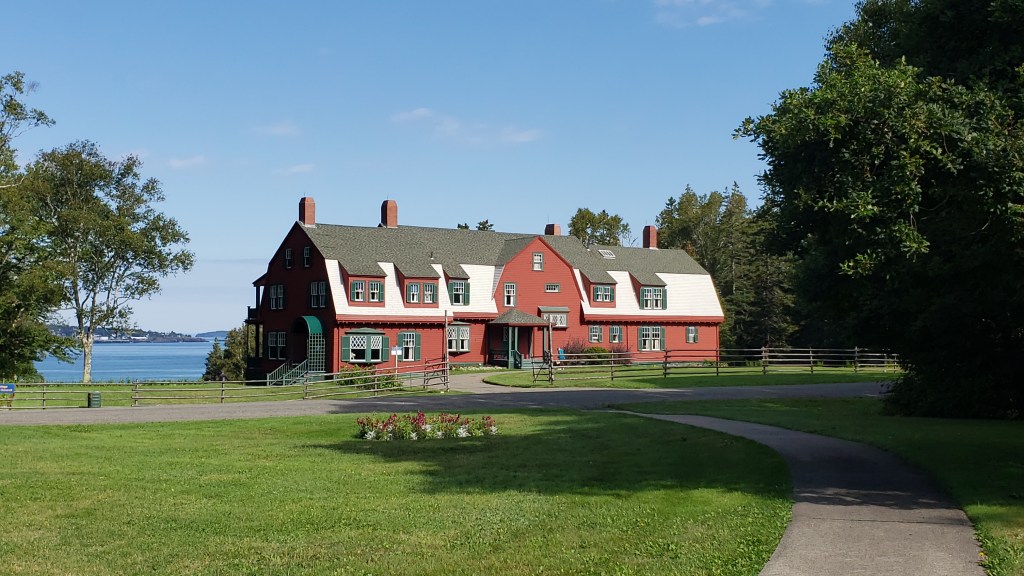
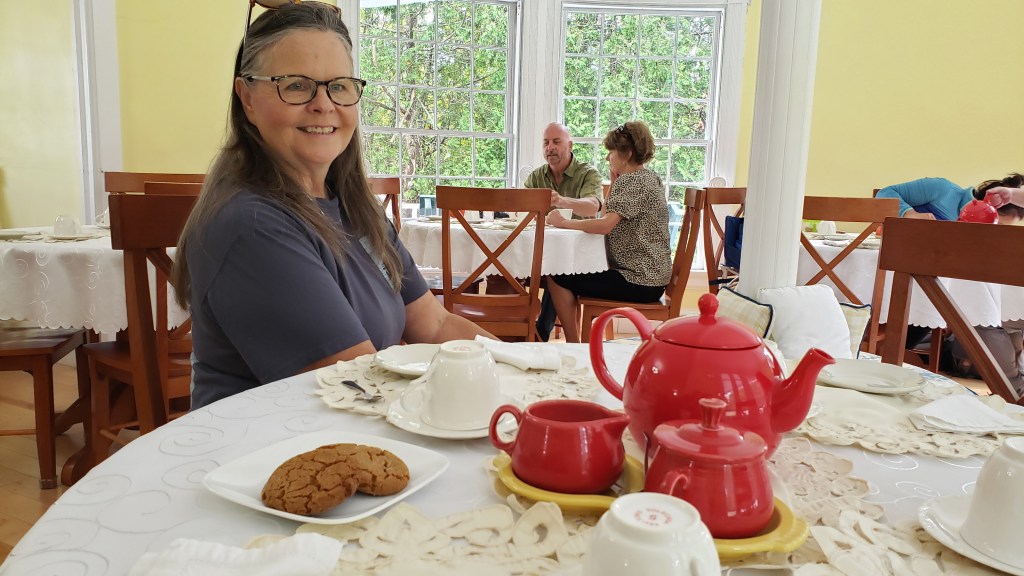
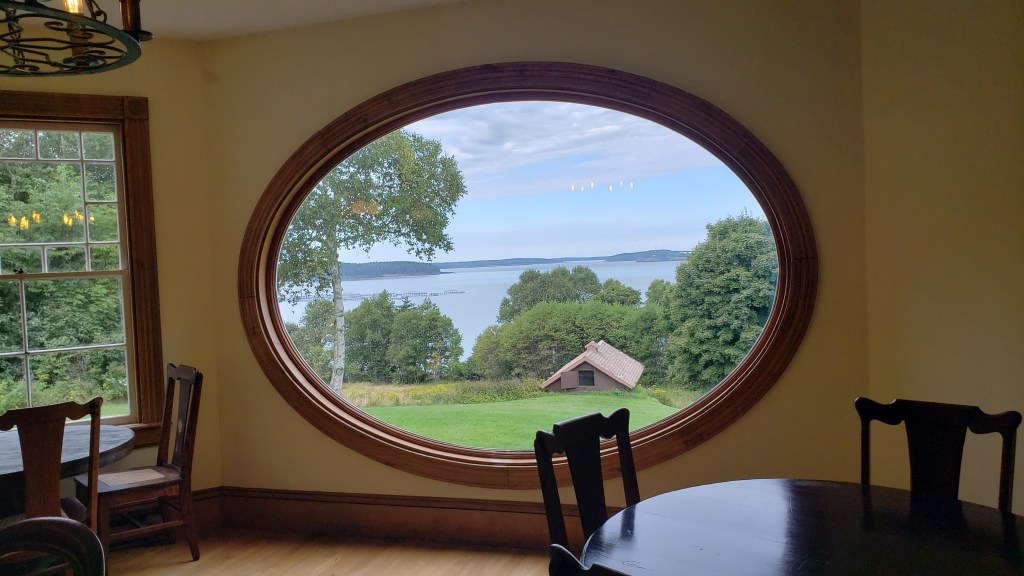
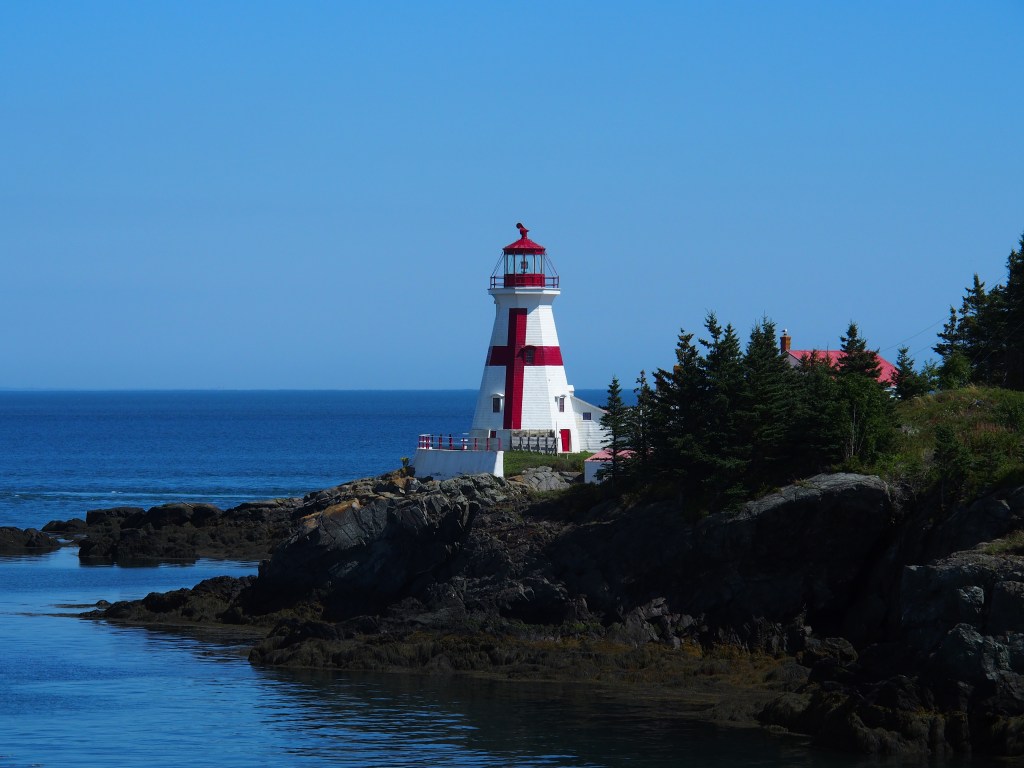
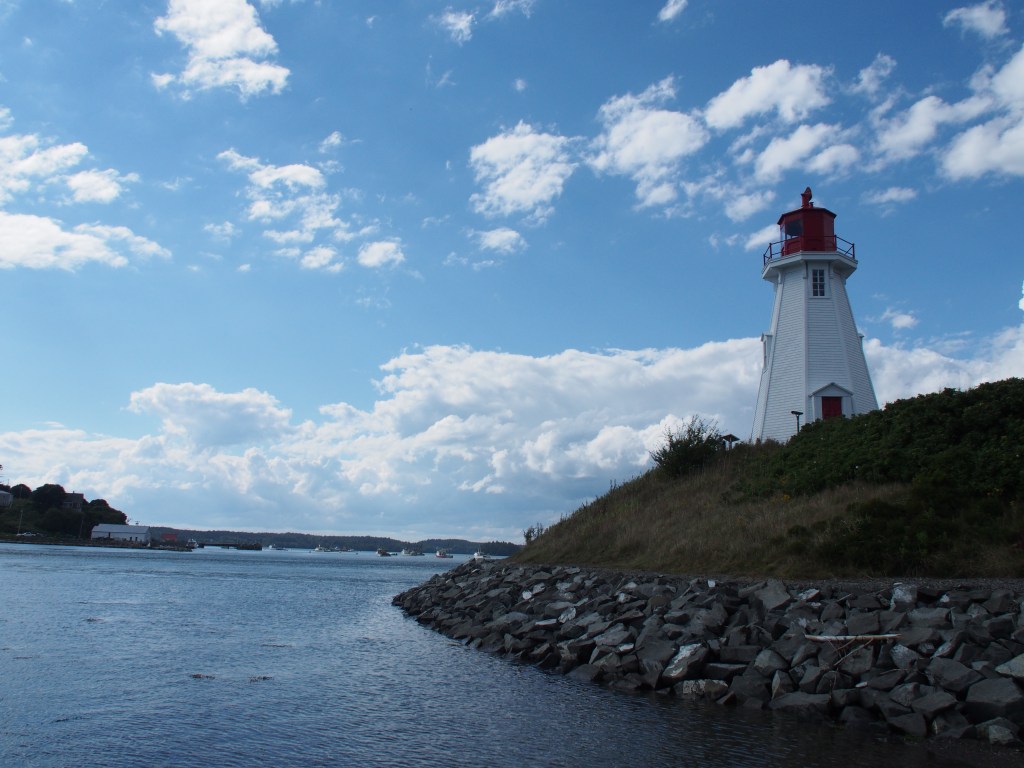
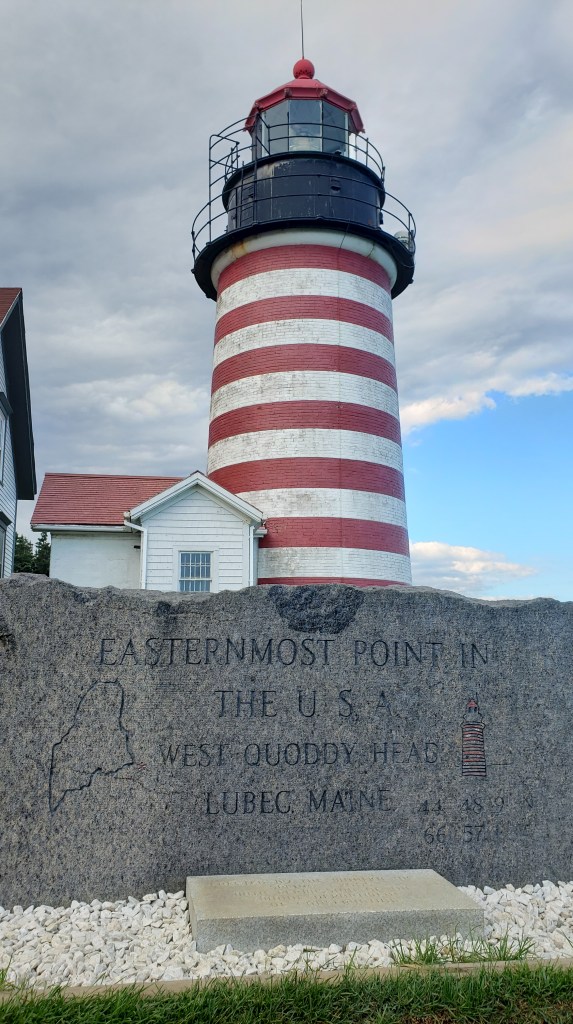
On Thursday (9/1), we grabbed our passports and headed over to Lubec, then across the Roosevelt Memorial Bridge to Campbello Island in the New Brunswick province of Canada. Campobello Island was the summer home of Franklin Roosevelt and his family. The home and surrounding area are part of an International Park, administered by both the US and Canada. While there, we visited the Roosevelt House, another house that was being used by the park service to host Tea with Elanore which we attended, and the neighboring Hubbard Cottage with its large round window overlooking the bay. Tea with Elanore lasted nearly an hour where two young ladies provided a good bit of information regarding the life of Elanore Roosevelt, from childhood up through her life, even after FDR had passed away. All the while, we were treated to a very good hot tea and freshly baked Ginger Snaps. The Hubbard Cottage was home to one of FDR’s neighbors. The wife had found a large round window during some overseas travel and basically built the cottage around that window and its view of the town of Eastport, ME across Cobscook Bay. After touring the houses and having our tea, we drove the ten-mile long island, enjoying views of the area, along with the Harbor Head Light Station and the Mulholland Lighthouse. Unfortunately, we were unable to walk across to the point where the Harbor Head Light Station was located because of the rising 20’+ tide that was quickly coming in. (More about this later.) After driving back across the Roosevelt Bridge, we took a short side trip to the West Quoddy Head Light, located at the far eastern tip of the United States.
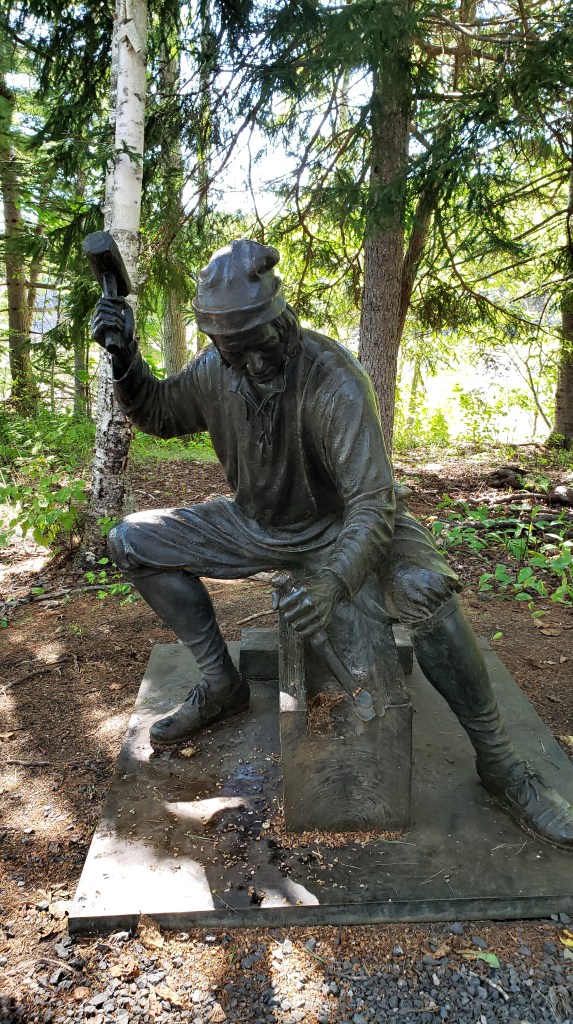
We got a bit of a late start on Friday but did manage to drive up to visit the St. Croix Island International Historic Site near Calais, ME (which we found was pronounced cal-iss, not cal-lay like in France). St. Croix Island was a small island where a French expedition led by Pierre Dugua tried to establish a settlement over the winter of 1604/1605. It is one of the earliest European settlements in North America. They believed that the small island would be easy to defend, but unfortunately, trapped on the island due to ice, thirty-five, or nearly 1/3 of the settlers, died that winter, probably due to scurvy. That spring, the Passamaquoddy Indians befriended the settlers, brought them food and medicinal plants and began trading with the French. The park had a very interesting exhibit that consisted of over a half dozen statues depicting the French settlers and the Passamaquoddy Indians. From there, we drove into Calais for a “Walmart day”, to pick us some supplies.
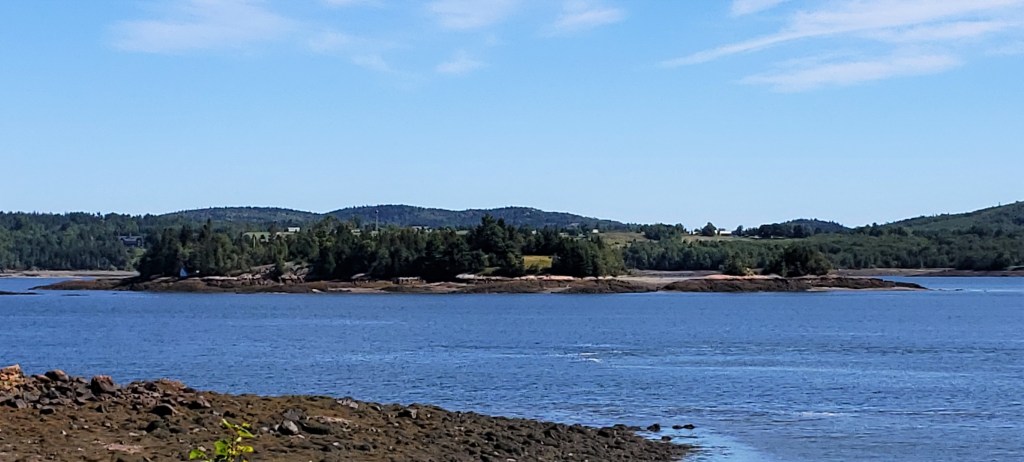
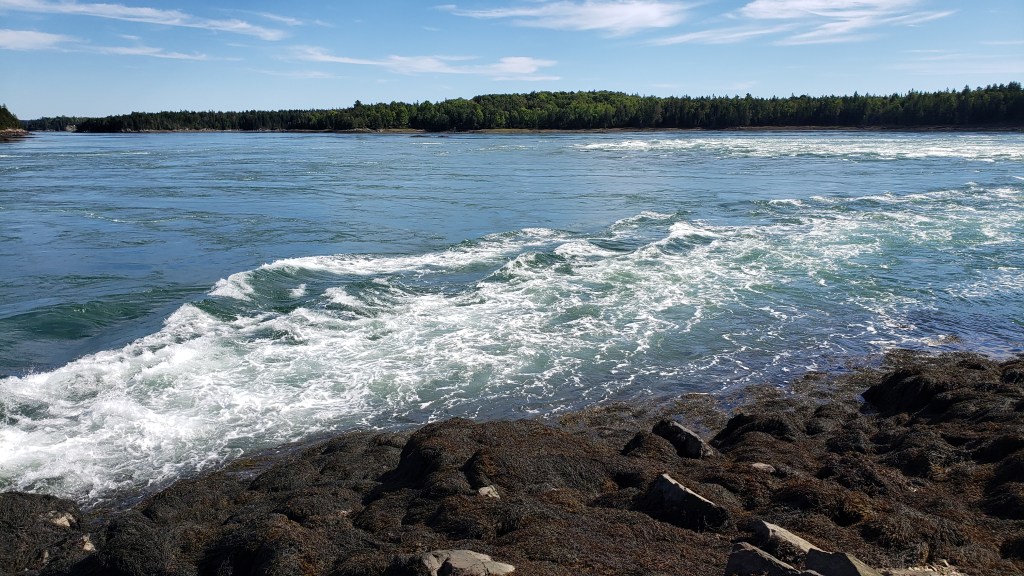
The next day, we toured around the area, visiting a number of small parks in the Lubec area known as Cobscook Shores. This was a system of fifteen waterfront parks that included hiking/biking trails, picnic areas, scenic overlooks, and twelve miles of undeveloped shoreline. The parks and their amenities appeared to be fairly new. After touring many of the parks, we moved over to Reversing Falls State Park. This very unique area of Cobscook Bay was something to see. Due to the extremely high tide in the area (about a 20-foot rise or fall, every 6-1/2 hours), there was an area where some falls or rapids flowed one direction when the tide was coming in and in the opposite direction when the tide was going out. We arrived at the part about 90 minutes before actual high tide and there was a significant flow going from our left to right. I’m unfortunately unable to load a video into this blog, so hopefully the picture below can illustrate just how fast the flow was from the incoming tide. These are not waves, but the actual current caused by the tide flowing in. There were very high rapids and a large whirlpool (over 100-feet across). As we watched over the next couple of hours (it was a beautiful evening) and the tide peaked, the flow slowed down to a complete stop. Within about another half hour, we could see the flow change directions from our right to left, going back out to sea. By that time it was beginning to get dark, so we had to leave before the tide began to fall enough to really see the rapids going back out.
We pulled out of Cobscook Bay State Park on Sunday and started our way back west. We spent the night at another Harvest Host, with four other campers, called Misty Meadow Alpaca Farm in Sidney, ME. While there, Debbie picked up a knitted cap (toboggan) made from alpaca fleece, and I got a pair of gloves. From there we continued west into New Hampshire, which I’ll discuss in my next blog post.

 LyndDebTravel