Post #9: Vermont, September 13 to 20.
For our Vermont exploration we decided to split the state into two stops, one more southeastern and the other more northwestern. We felt that would give us the chance to visit most of the things we wanted to see without spending all of our time in the truck driving between them.
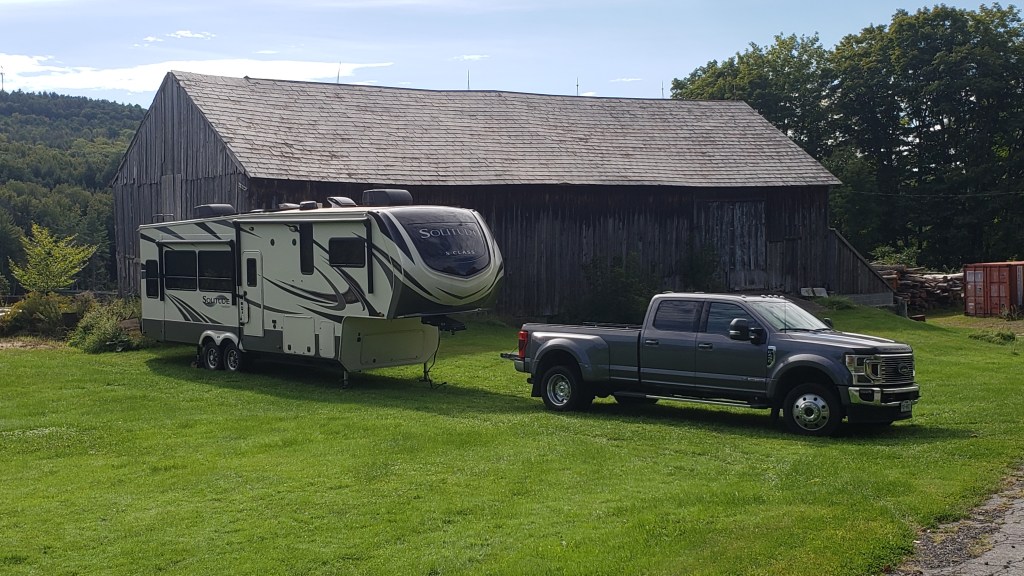
Our first stop was at a Boondockers Welcome. Ray and Ruth have some property just outside of Windsor, VT, just off the Connecticut River and New Hampshire border. They call the place Just-A-Dubbin. Honestly, I’m not sure what that means, but that’s how they’re listed on the website. In spite of it being another one of our rainy travel days, we managed to get backed into our place beside one of his old barns and maybe 60-70 yards from their farmhouse. The site was very level, especially for a grass site, and the location on their rural dead-end road meant that we’d be having little or no traffic going by. Luckily for us, the rain stayed really light until after we had our trailer all set up. Our plan was to stay there for three nights, counting on our solar to keep us powered, with the generator as backup. Ray was very gracious and stayed around to give us a lot of good information about things to do in the area.
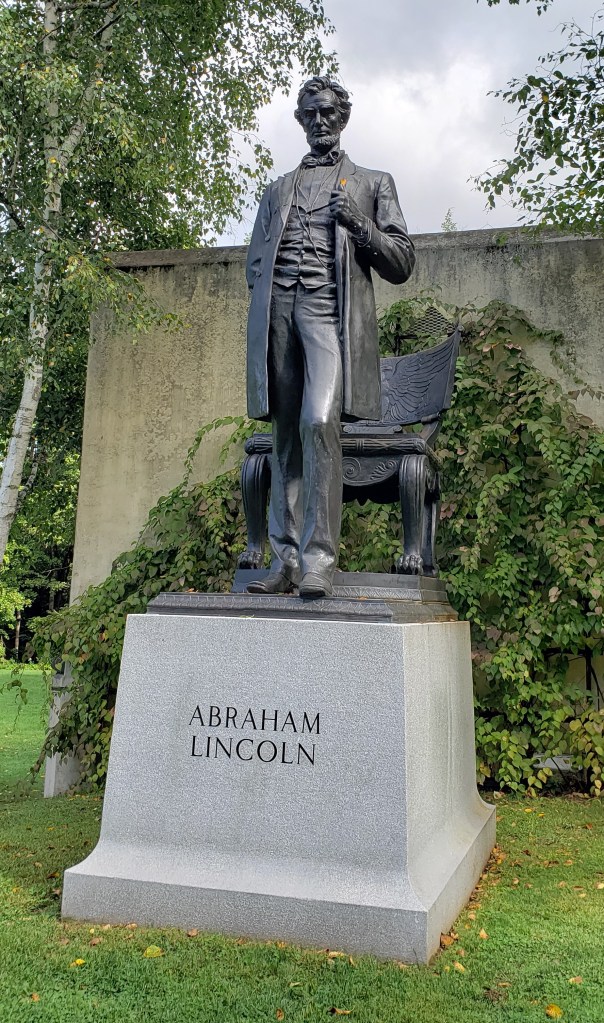
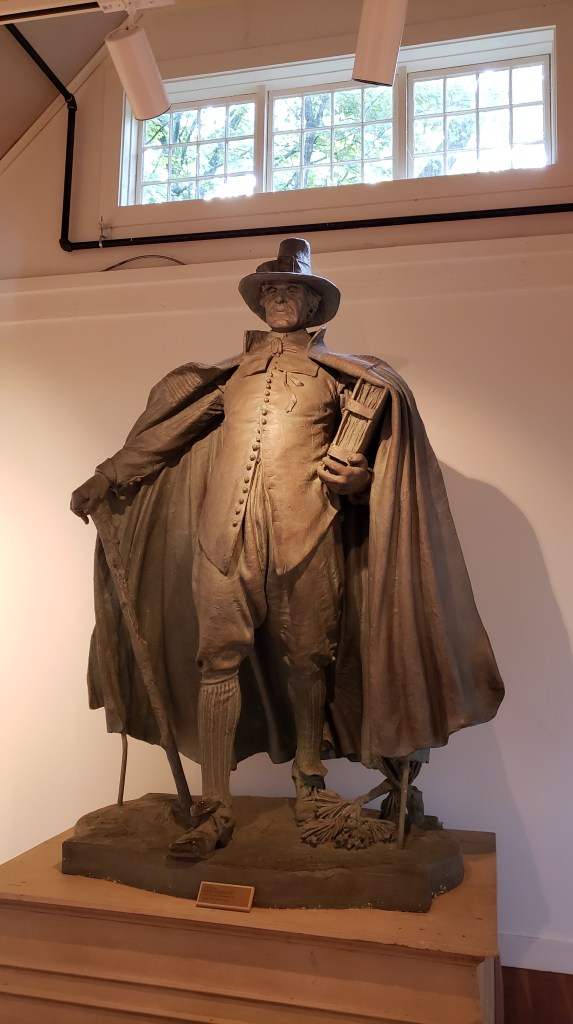
The first of our two full days of “sight-seeing” began with a trip to the Saint-Gaudens National Historical Park which was actually back just across the river in Cornish, New Hampshire. The site was the summer home of Augustus Saint-Gaudens and his family throughout the 1890’s, then their year-round home until his death in 1907. Saint-Gaudens was a sculptor who had learned his craft as an apprentice, initially learning the trade as a cameo cutter. His first major commission was a statue of Civil War Admiral David Glasgow Farragut that unveiled in New York City in 1881. His style was different than most sculptors at the time. It was very realistic and tended to show is subjects “in motion”. Some of his other more well-known sculptures are the General Sherman monument in NYC’s Central Park and a statue of a standing Abraham Lincoln located in Chicago. The details that he added, right down to the stitches in their socks made each one so realistic.
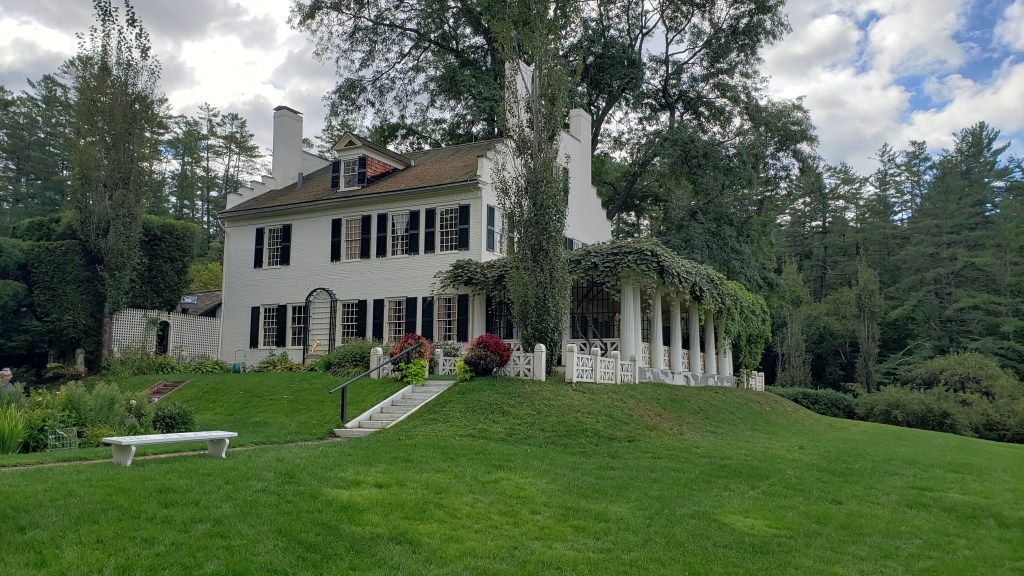
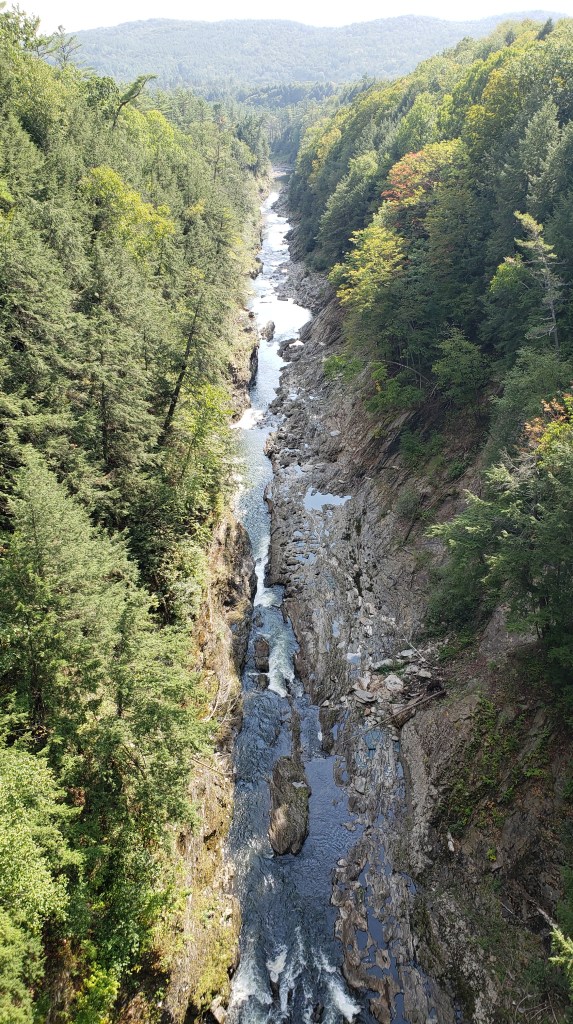
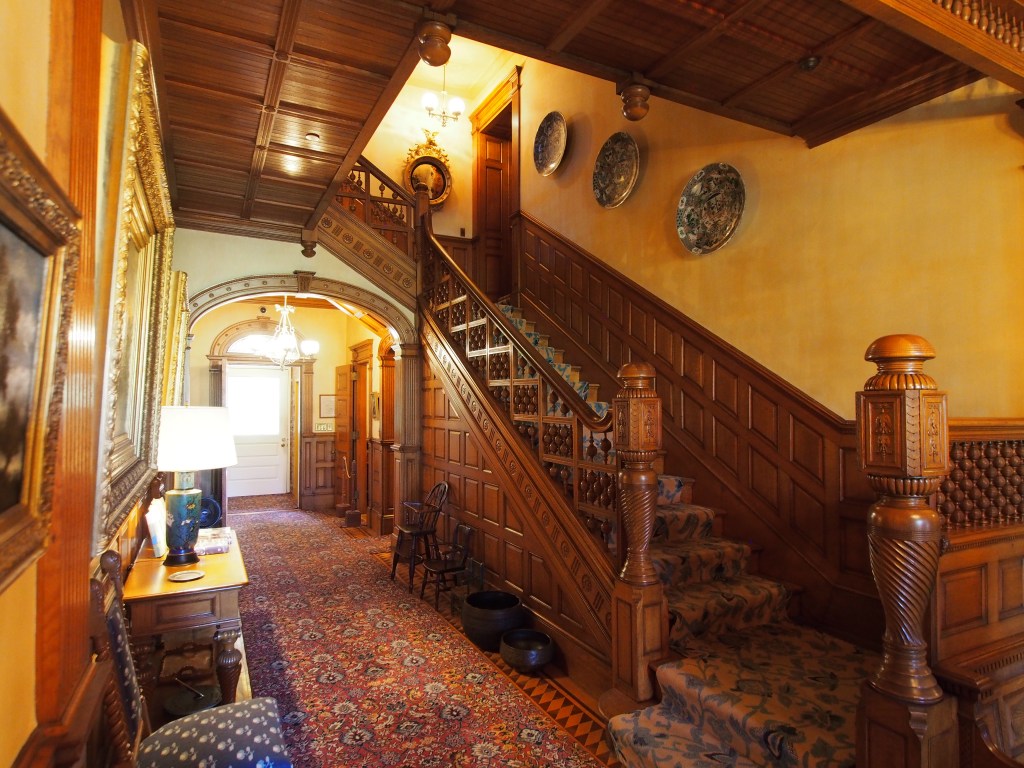
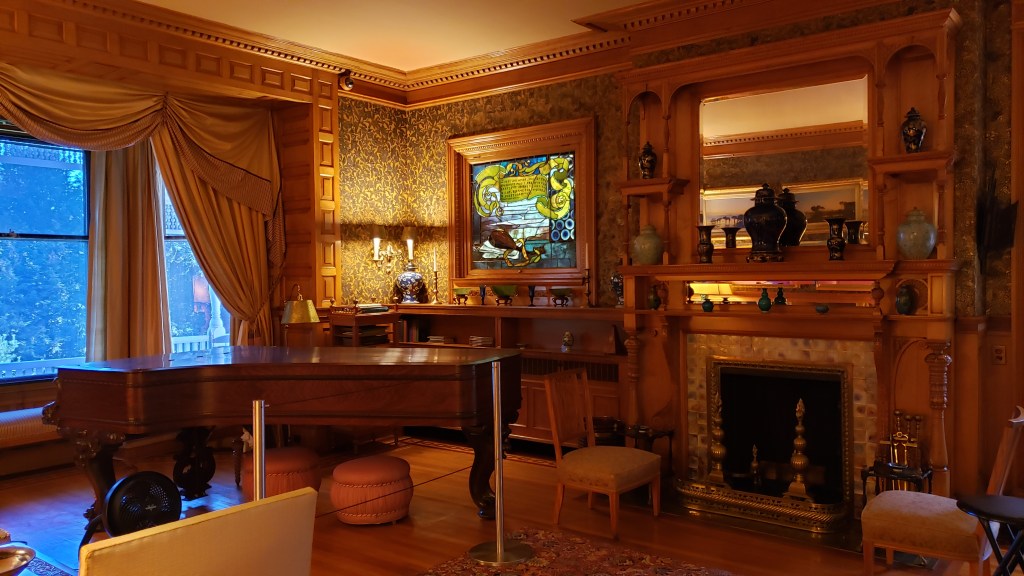
We followed that up with a visit to the Marsh-Billings-Rockefeller National Historical Park in Woodstock, VT. The mansion and grounds were the home for three famous families that were all very influential in the conservation movement of the late-1800 and early-1900’s. The original owner, George Perkins Marsh, grew up in the area and spent a lot of time in the woods around their home. He was impacted by the devastation that first the logging, then the sheep industries brought upon Vermont. We found that by the end of the Civil War, 80% of Vermont had been deforested. That’s hard to believe with the views we see of Vermont today. In 1864, Marsh wrote a very influential book about the interaction with man and his surroundings called Man and Nature that is still in print and studied today. Frederick Billings purchased the Marsh farm in 1869 after returning from the west (think Billings, MT) and finding the desolation that Vermont was suffering, began a project to reclaim the barren land for forests and farmland. He also imported dairy cows and basically started the dairy industry in the state. Billings, followed by his wife, three daughters, and later his granddaughter began replanting trees by the thousands. His granddaughter, Mary French, married Laurence S. Rockefeller in 1934. This brought together two influential families, both with deep commitments to conservation and stewardship of the land. The park was donated to the National Park Service and became the first National Park in Vermont in 1998. From there, we drove over and did the short hike along Quechee Gorge.
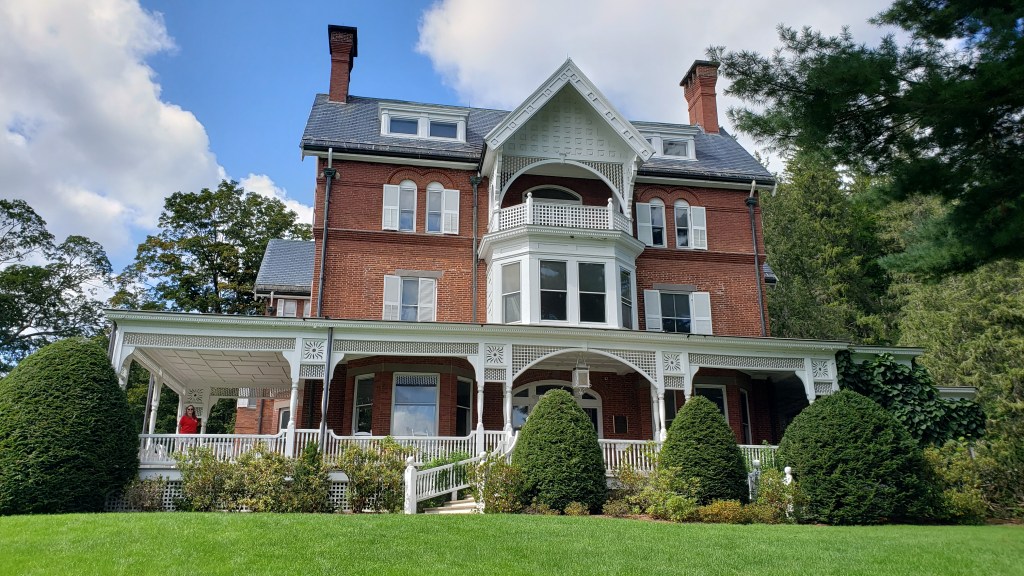
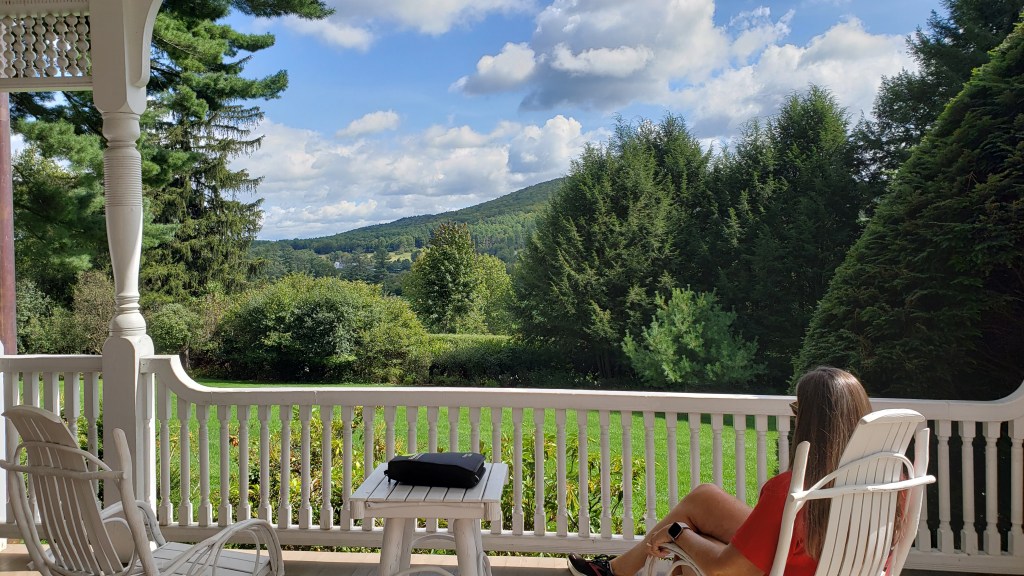
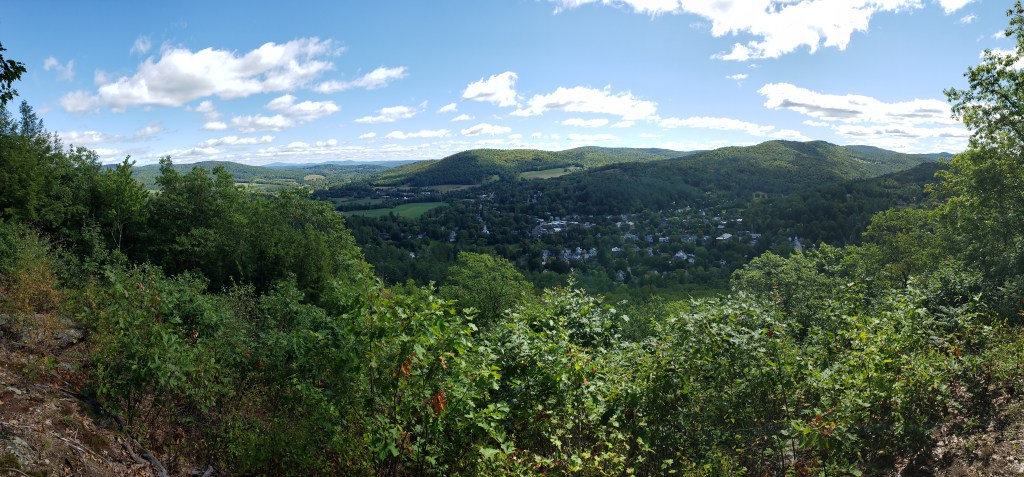
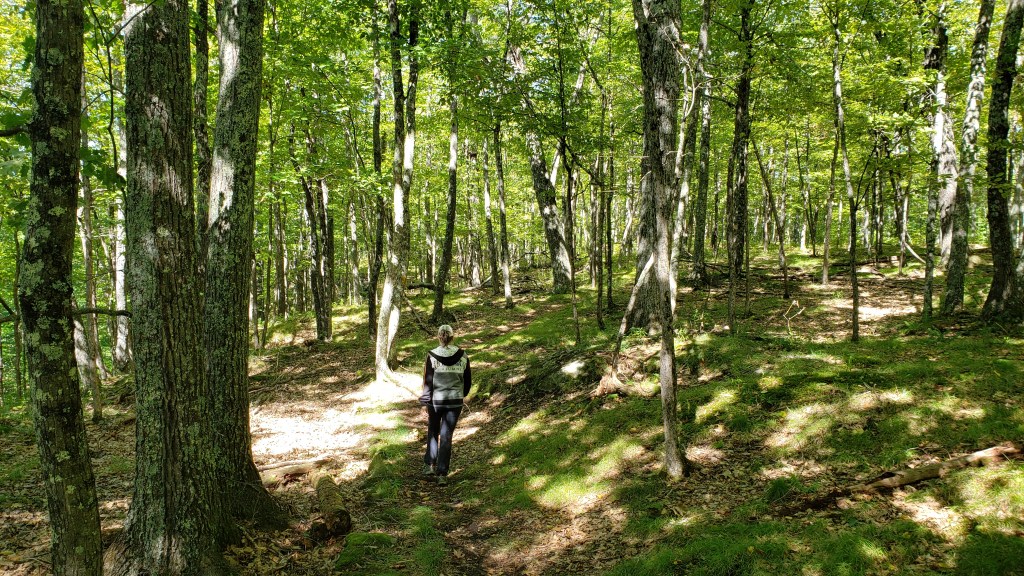
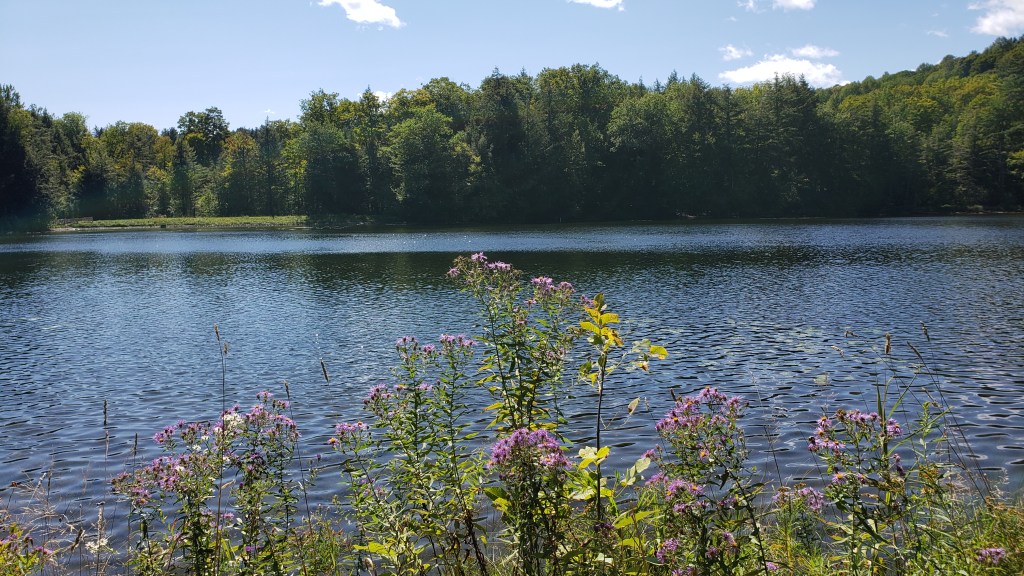
The following day, we returned to the Marsh-Billings-Rockefeller park to do some hiking. Debbie and I hiked up to the top of Mount Tom, via the Precipice Trail, with overlooks of the town of Woodstock. We then hiked some of the carriage roads that the families had built through the areas that they’d reforested between the 1880’s and 1930’s. Our total hike that day was just six miles, but was wound through the forest, around the Pogue Pond, then back down to the visitor center. After a quick picnic lunch, we took a ranger guided tour of the mansion and gardens. The mansion was very interesting with the interaction between the house built in the 1800’s but with televisions and push button telephone.
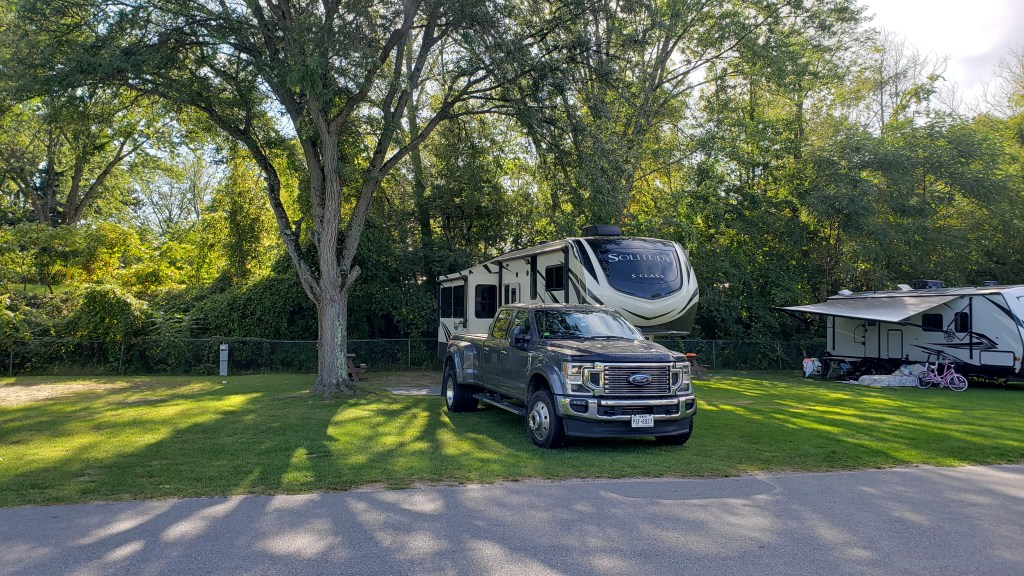
On the 16th, we moved just over 100 miles northwest to the town of Colchester, just to the north of Burlington. On the way, we stopped at the Cold Hollow Cider Mill. It was very crowded, especially given that it was the middle of a weekday. We tested some of their fresh apple cider and bought a dozen of their famous apple cider donuts. I was a bit worried that we wouldn’t eat a dozen of them before they went bad, only to find that we ate them all within a couple of days. They were SO good. We drove from there to our campground which had lots of space and full hook-ups. The site was a perfectly level grass site and we noted just how great of a site that it was. BUT, as we unhooked and started to get the trailer level, we ran into issues with our Ground Control leveling system. After working on it for well over an hour, including two phone calls to Lippert, we finally managed to get all of the legs down and the trailer level. Then Debbie pointed out that our EMS was throwing an error at the power pedestal, showing that we had a live ground on the electric. The EMS wouldn’t let it pass power through to the trailer. After getting the resident electrician and his camp host helper over to work on it for another half hour or so, we discovered that the problem was not with our power pedestal, but with our 90-degree adapter that we use to take the stress off of the trailer connection to the heavy 50-amp cord. After taking that out of the link, everything was working perfectly. After almost two hours of trying to get set up, we were finally able to rest for the remainder of the day. It was a rough day considering that we’d only moved a little over 100 miles.
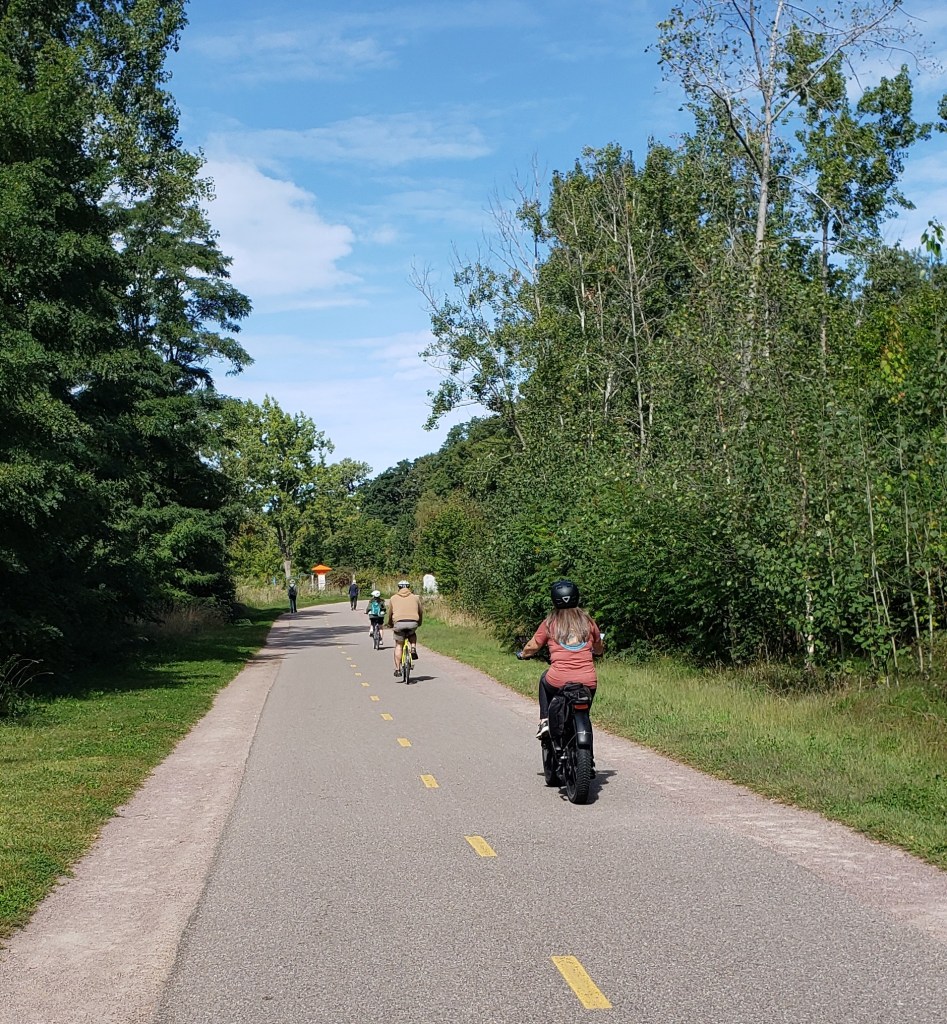
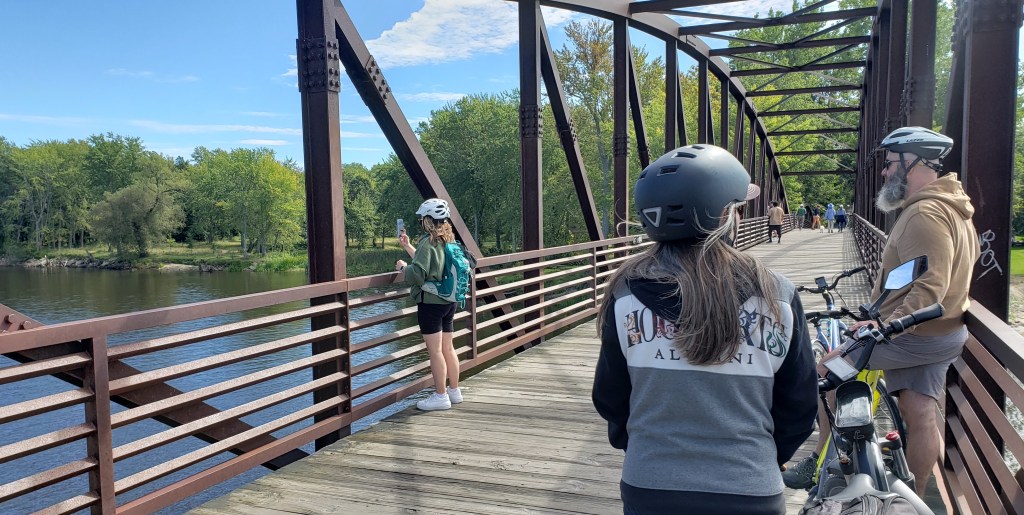
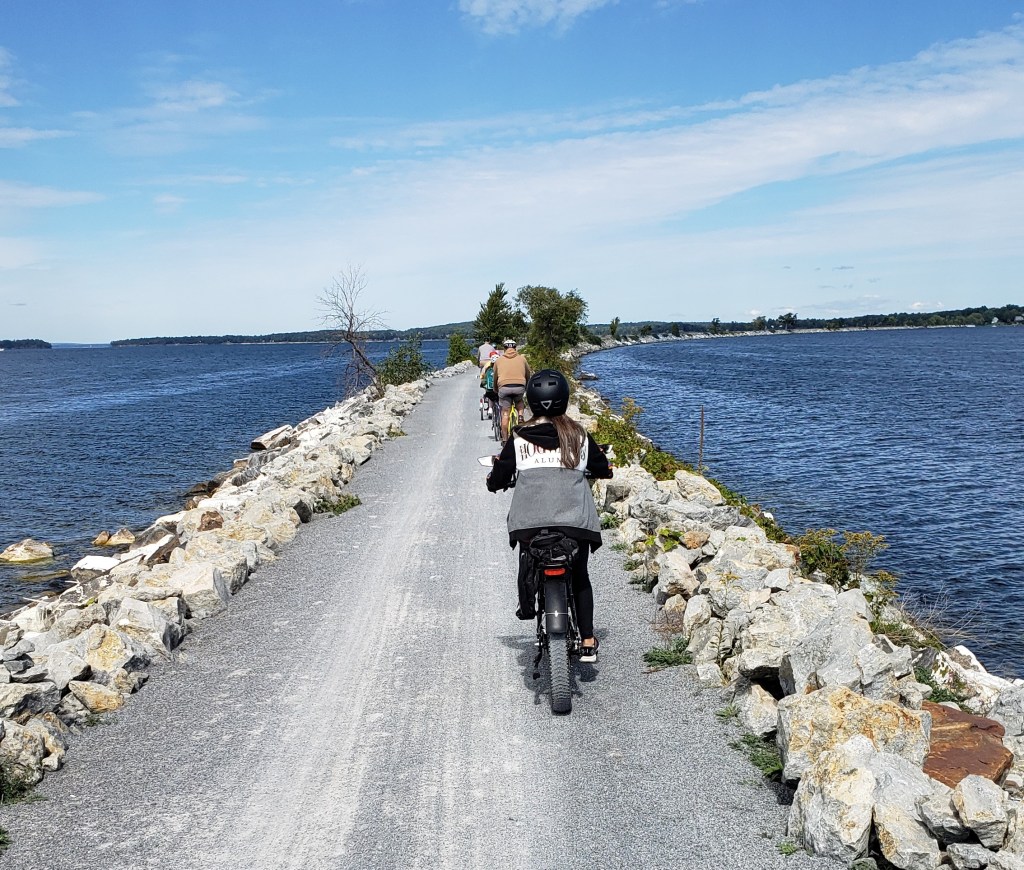
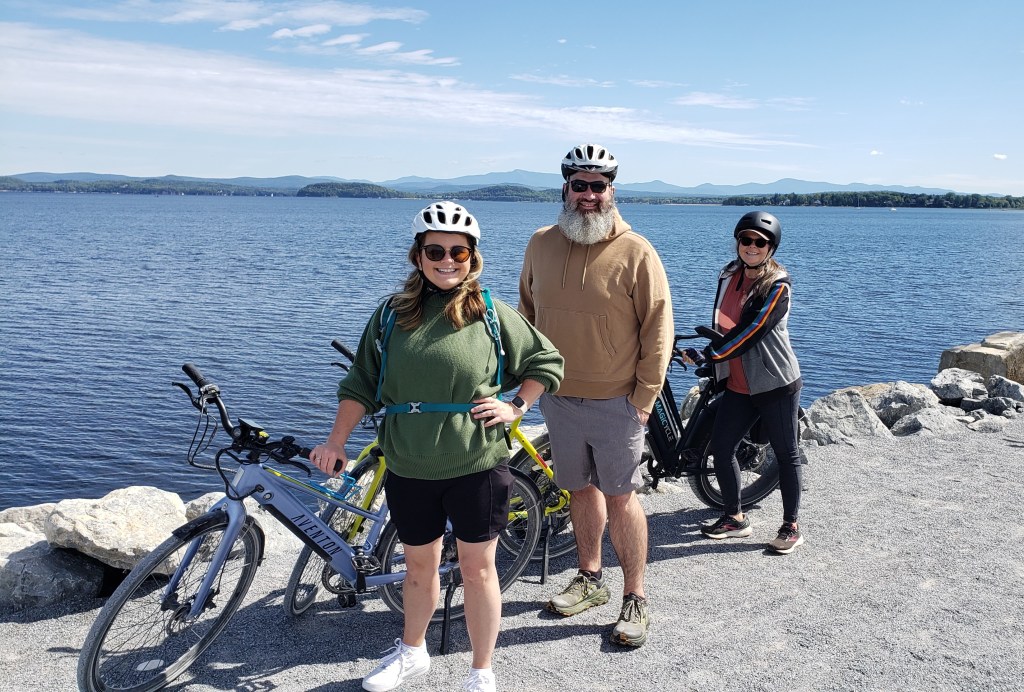
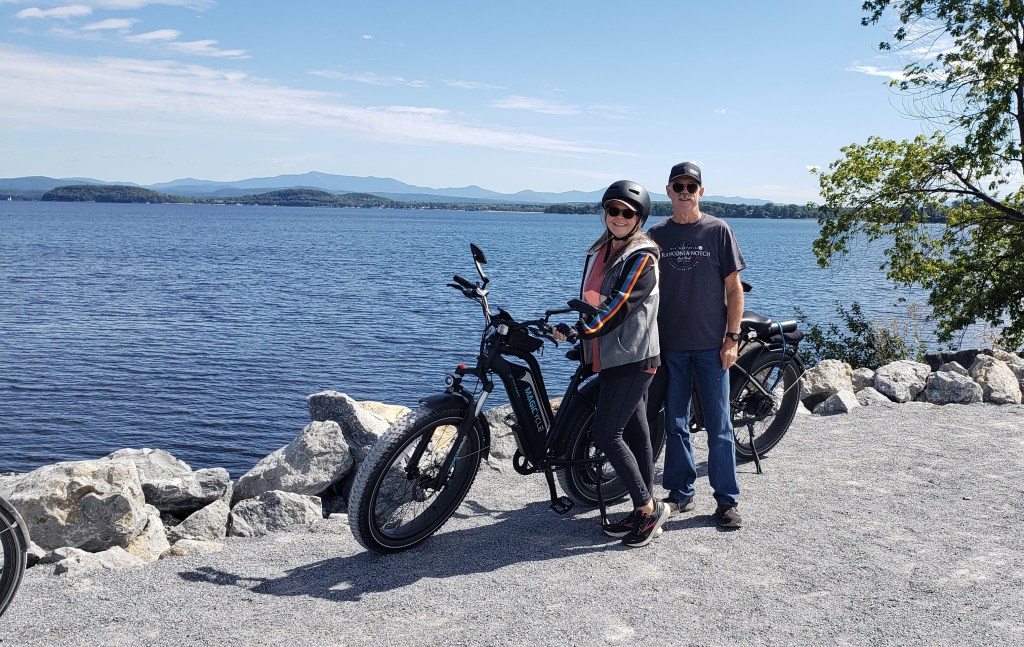
On Saturday, we planned to meet up with Zack and Lindsay Orlicek. We first me Zack and Lindsay back in June at a Harvest Host location in Colorado. Back then, they had just become full-timers in their 25-foot Airstream trailer and have been moving around the country ever since. They work from their trailer all week and do their exploring or move locations on the weekends. We loaded up our electric bikes and met them at a bike rental shop in Burlington. From there, we rode the Island Line Trail north along Lake Champlain up to the Colchester Causeway Trail that cuts out into the lake to a point where you have to take a bike ferry about 50 yards across the channel where it continues over to Grand Isle. Since they were limited on their bike rental, we turned around at that point and rode back to Burlington for a total of 20 miles. We enjoyed a late lunch at a restaurant in Burlington (thanks, Lindsay!) before heading back to our campground.
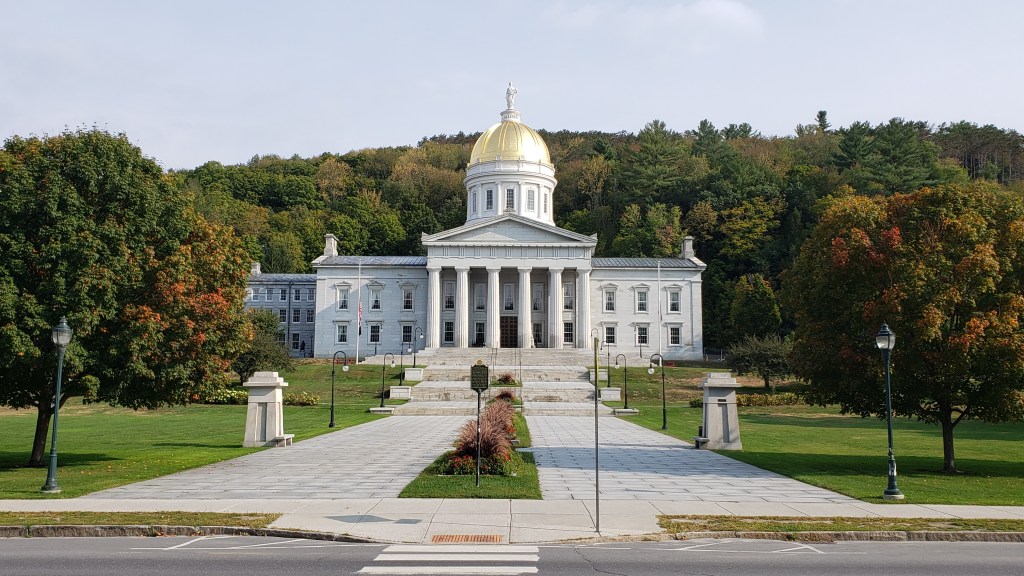
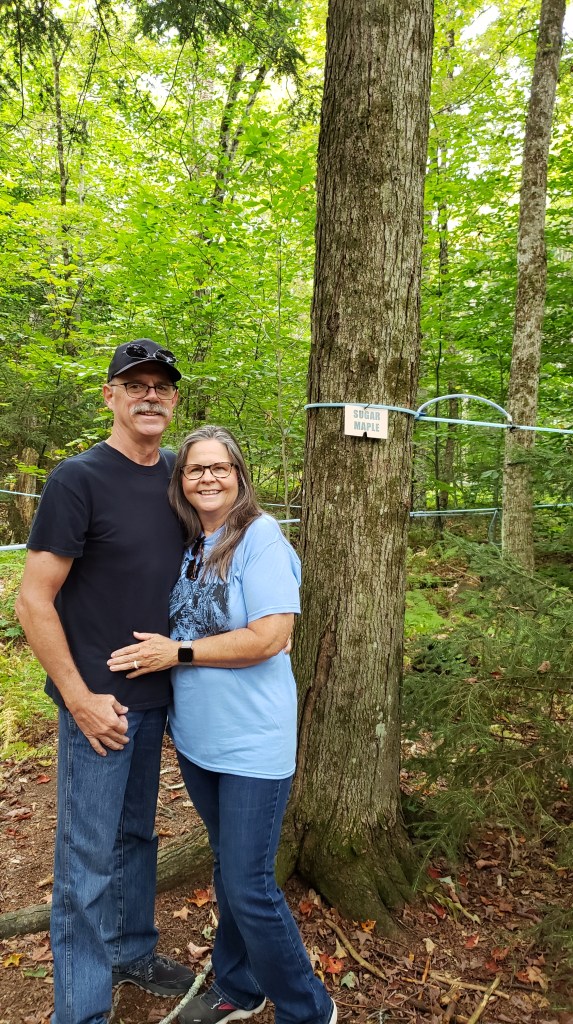
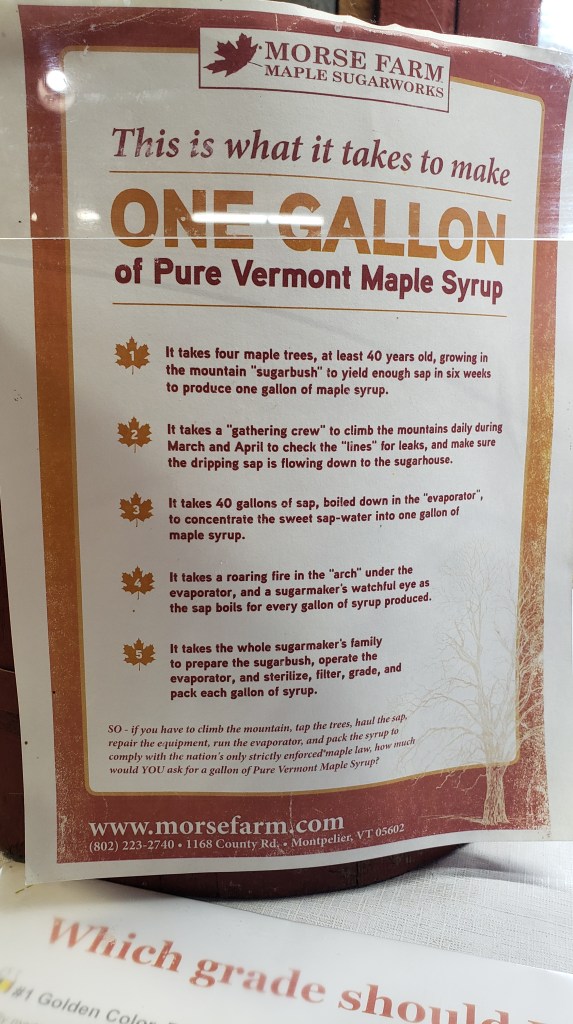
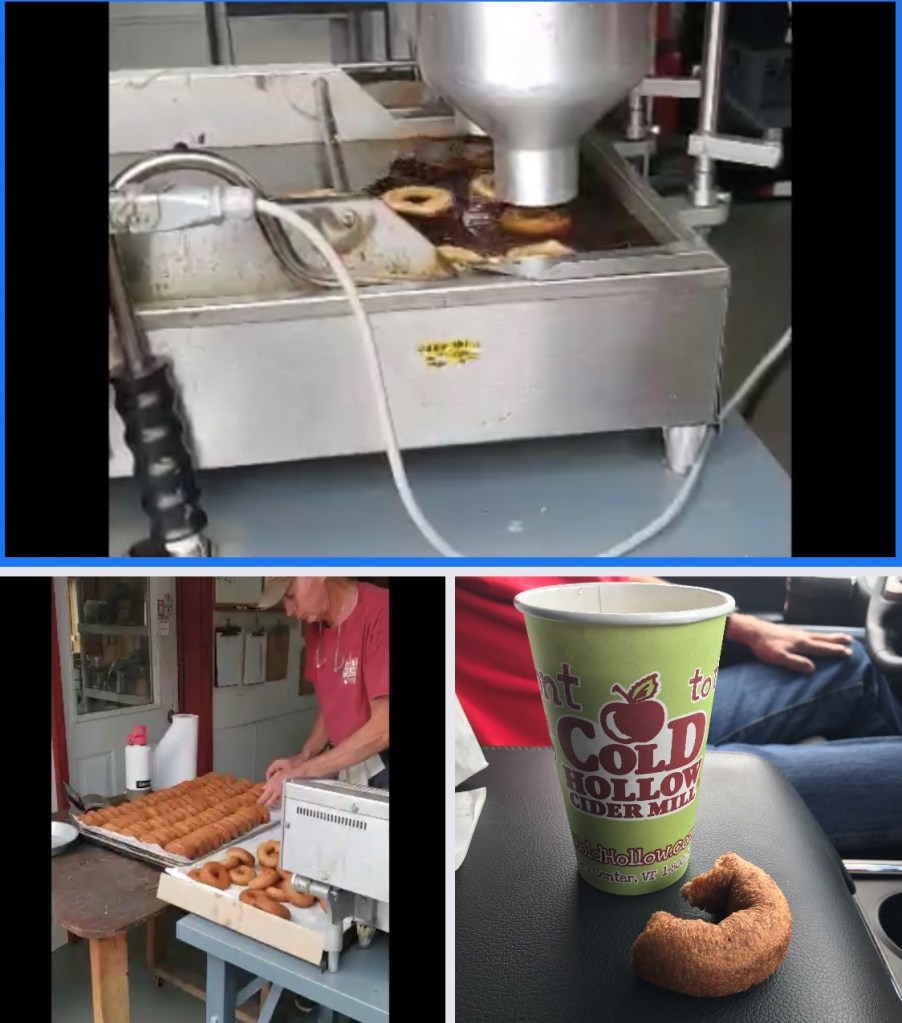
Since we had so much fun with Zack and Lindsay on Saturday, we decided to meet up with them again on Sunday. In spite of the bad weather that rolled in, we still met them at the Morse Maple Sugarworks near the state capital of Montpelier. We were running a little early, so Debbie and I took the time to go by the Vermont State House in Montpelier. The gold dome of the state house was pretty impressive, but the building was closed and there were no tours since it was Sunday. After meeting them at Morse, we took a tour of the sugar works and out among the maple trees to see how they use tubing to tap into 5,000 maple trees every year. We also had the opportunity to taste-test each of the four grades of pure maple syrup. The syrup gets darker with a stronger taste as the sugaring season progresses. We decided that we liked the Grade 2 syrup and picked up a small bottle. From there, we all drove over to Waterbury for lunch at an interesting “smoked meats” restaurant. Since they’d not been there yet, and we were out of donuts, we then drove over to Cold Hollow Cider Mill and drank hot apple cider and ate donuts as the rain really started to come down. We asked one of the guys that was making donuts just how many they made per day. He said that a normal day would be about 6,000 or more, but that 15,000 on a weekend wasn’t unusual. Due to the weather (and the fact that Ben and Jerry’s factory is closed on Sundays), we said our goodbyes to Zack and Lindsay and we headed for the scenic drive up through Stowe and Smuggler’s Notch. Unfortunately, the weather didn’t cooperate, and we were unable to take the gondola to the top of Mount Mansfield as planned. The drive up through Smuggler’s Notch was pretty tight in our dually truck, but we managed to get through on our way back to our campground. Unfortunately, the rain and fog really cut down on the views of the notch.
Monday was our last day in Colchester, but with the rain and threat of thunderstorms, it turned into a “utility day”. Debbie did laundry while I went to the grocery store to pick up a few things, then to a nearby gas station the GasBuddy said was the cheapest diesel in the area at $4.839 per gallon. The rest of the afternoon was spent watching TV, doing some other chores around the trailer, and writing this blog.
On Tuesday, we head around the north end of Lake Champlain to our next spot near the lake in Saranac Lake, NY where we begin our three-week journey across the state eventually landing in Niagara Falls.

 LyndDebTravel